
The Future Begins With Accessible Communication
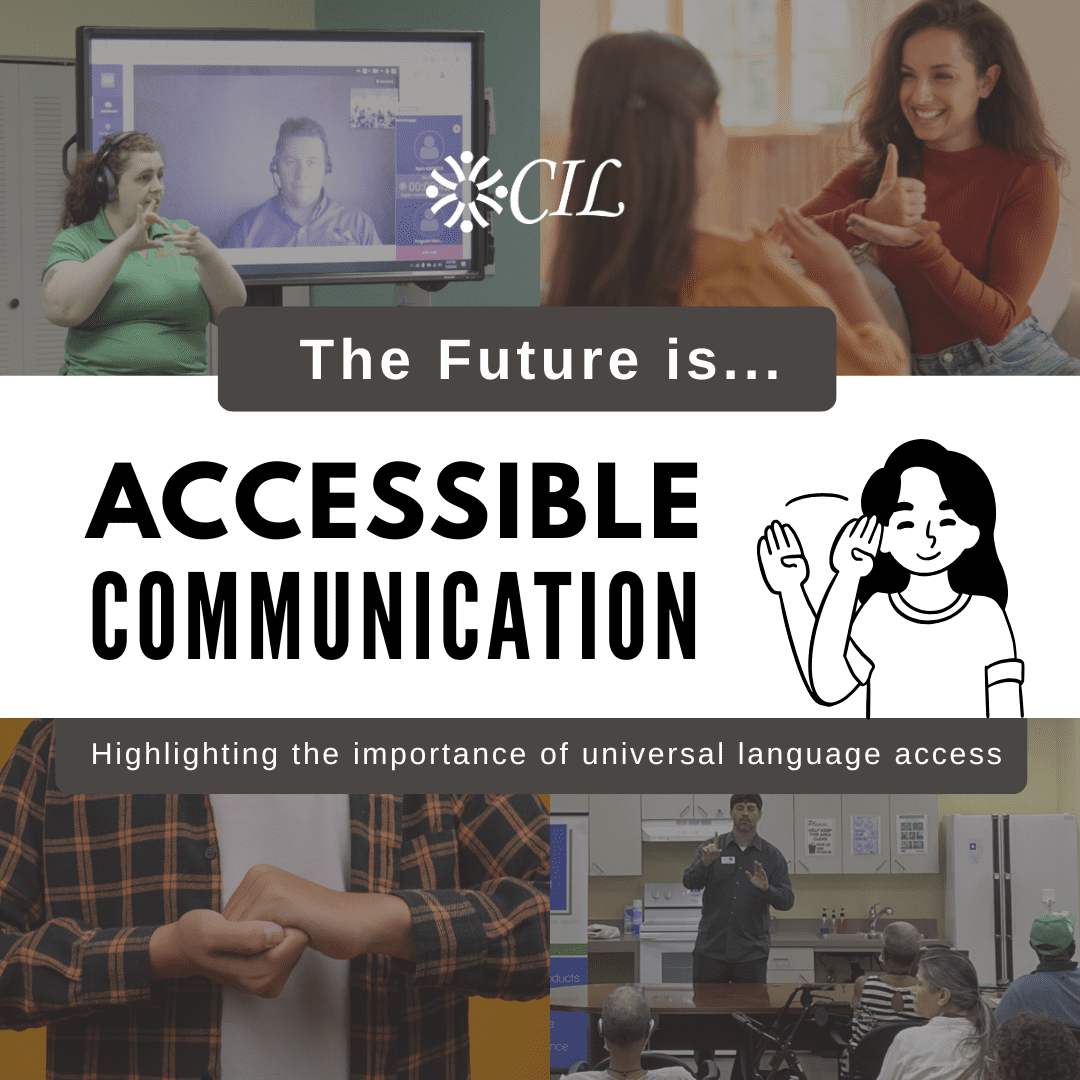
This March, we highlight the importance of language equity and accessible communication to encourage leadership, independence, connection, and belonging for Deaf and disabled communities. At the Center for Independent Living, we believe inclusive communication strengthens communities by ensuring that everyone can participate fully in daily life. A world where inclusive communication is understood and incorporated into everyday life is the future CIL is striving to create. Being able to express yourself is a civil right, but when barriers exist that prevent Deaf or hard-of-hearing individuals from doing so, their right is denied. By reframing accessible communication as a necessity rather than a courtesy, we inspire action toward making our brighter future a reality.
Captioning apps, smart hearing aids, and sign language translation tools are examples of assistive technology that help make communication more accessible for Deaf, hard-of-hearing, and nonverbal individuals. While technology plays an important role, true accessibility happens when innovation is paired with inclusive design, policy, and community awareness.
What is language equity, and why is it something we strive to achieve? Language equity ensures that individuals have equal access to communication, information, and services in ways that respect their identity and preferred communication methods. Language equity is necessary for people to equally receive essential services like education and healthcare.
When communication access is limited, individuals may face unnecessary barriers in education, employment, and healthcare settings. When institutions fail to support students who are Deaf by not providing them with an interpreter, they are placed at a disadvantage, in which their participation and ability to learn are limited. A lack of language equity in employment results in fewer job opportunities and poorer workplace experiences. Miscommunication, stereotyping, and bullying can lower morale, reduce productivity, and create isolation. According to the National Deaf Center, in 2023, over 40% of Deaf individuals experienced unemployment, compared to nearly 25% of hearing individuals. A lack of proper language interpretation in a
medical setting can lead to misdiagnosis, and interpreter services are often not available due to high costs. Expanding communication access helps create environments where individuals can contribute their skills, perspectives, and leadership.
Our goal at CIL is to create an environment where being Deaf, hard-of-hearing, or nonverbal does not limit one’s quality of life. Accessible communication promotes inclusive communities where anyone can thrive and participate in daily activities, school, and work, without needing to always rely on an interpreter. It encourages the education of new life skills, such as making sign language a common practice. Skills like sign language can be helpful in various situations. For example, sign language can be a more affordable way to communicate with a family member who is losing their hearing when assistive hearing technology isn’t available.
CIL is building a future where communication access can be expected and normalized through its Deaf Voice program. We hope you will continue on this journey with us. We encourage you to learn more about the Center for Independent Living’s programs, goals, and support for Sign Language access as we work to shape inclusive communities through accessible communication.