
The Importance of Deaf Leadership
The Center for Independent Living believes that disability inclusion and representation are best achieved through strong leaders within their communities. Disabled individuals face many barriers in their day-to-day lives due to a lack of accessibility in public services and resources. CIL’s goal is to empower disabled individuals to become leaders within their communities and advocate for the inclusion and normalization of assistive technology, education, and resources that help create a fairer means of living. Because March is focused on our Deaf and hard-of-hearing community, we are excited to highlight the importance of Deaf leadership and how we are encouraging it through our DeafVoice program.
Accessible solutions are often difficult for Deaf individuals to obtain, whether that involves captioning technology, ASL interpreters, or alert systems. However, if these tools were built into everyday spaces, they would help create a more inclusive environment where Deaf individuals can participate fully and equally alongside everyone else. Deaf leaders can advocate for accessible resources by explaining firsthand why their implementation is so important.
This isn’t about speaking up for a few individuals. It’s about helping over 40 million hard-of-hearing Americans who still face barriers that prevent them from living comfortably and connecting meaningfully. Through DeafVoice, individuals can share their experiences and develop the skills necessary to build confidence. With confidence, we are building a community of Deaf leaders whose voices can lead to a less stigmatized and more connected future.
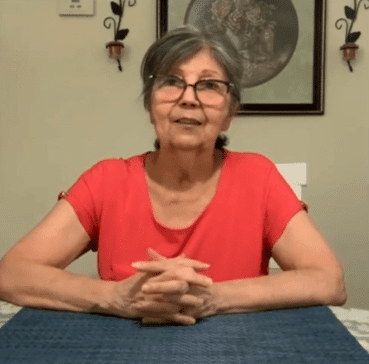
To better understand the importance of Deaf leadership and accessible communication, we spoke with Summer, our team lead for the DeafVoice program and a leader in the larger deaf and hard-of-hearing community. She shared her perspective on Deaf empowerment, ASL education, and how we can overcome barriers through determination and representation.
What does Deaf leadership mean to you personally, and why is it important for the community to see Deaf voices at the forefront?
“Deaf leadership means self-representation, empowerment, and being authentic. It’s very important for Deaf voices to be in leadership because we need the community to be able to see real-life experiences leading the way, and then also reinforce pride and strengthen your identity.”
What are some of the biggest communication barriers you see today, and how is DeafVoice working to change that?
“One of the biggest barriers” … “for communication is not providing access, including qualified interpreters, captions, clear communications, and practicing the hearing paces.”
Summer also acknowledged the importance of education, amplifying perspective, and creating a platform for deaf individuals, allies, and supporters to gain confidence.
In your role, how do you empower participants to advocate for themselves and others?
“In my role, I empower them by educating them about their rights, also helping them to be able to develop a communication strategy that works for them, and also helping them to be able to gain confidence in their voice and their real lived experiences.”
What do hearing allies sometimes misunderstand about communication access or ASL?
“Many of the hearing allies assume that American Sign Language is just English being reflected on the hands, when in fact it is a completely different and rich visual language that has its own grammatical structure and culture. And sometimes they think the access” … “ is optional, that it’s a nice-to-have service to provide rather than a requirement for equal inclusion.”
Looking ahead, what changes would you love to see in workplaces, education, or public spaces regarding communication access?
“I would love to see universal communication” … “become the standard.” “Where ASL is able to be provided on the spot, captions are able to be used as a standard to prevent those miscommunications, and also making sure that there’s accessibility” … “from the beginning to the end of the services, and that would become more of a natural environment and more fluid.”
If you could share one message with the next generation of Deaf leaders, what would it be?
“I would tell them your language is power and to boldly use American Sign Language in your community and treat accessibility as a baseline, not as a discussion. And make sure that you’re able to have quality measurements, protect each other, and enjoy it because your life is a journey.” “You don’t have to access, you don’t have to ask for access. You can redesign it so it will be accessible to all.”
You can support Deaf leadership and representation by spreading the word about CIL’s DeafVoice program.