
Accessibility Lives in the Details: Designing Spaces That Work for Everyone
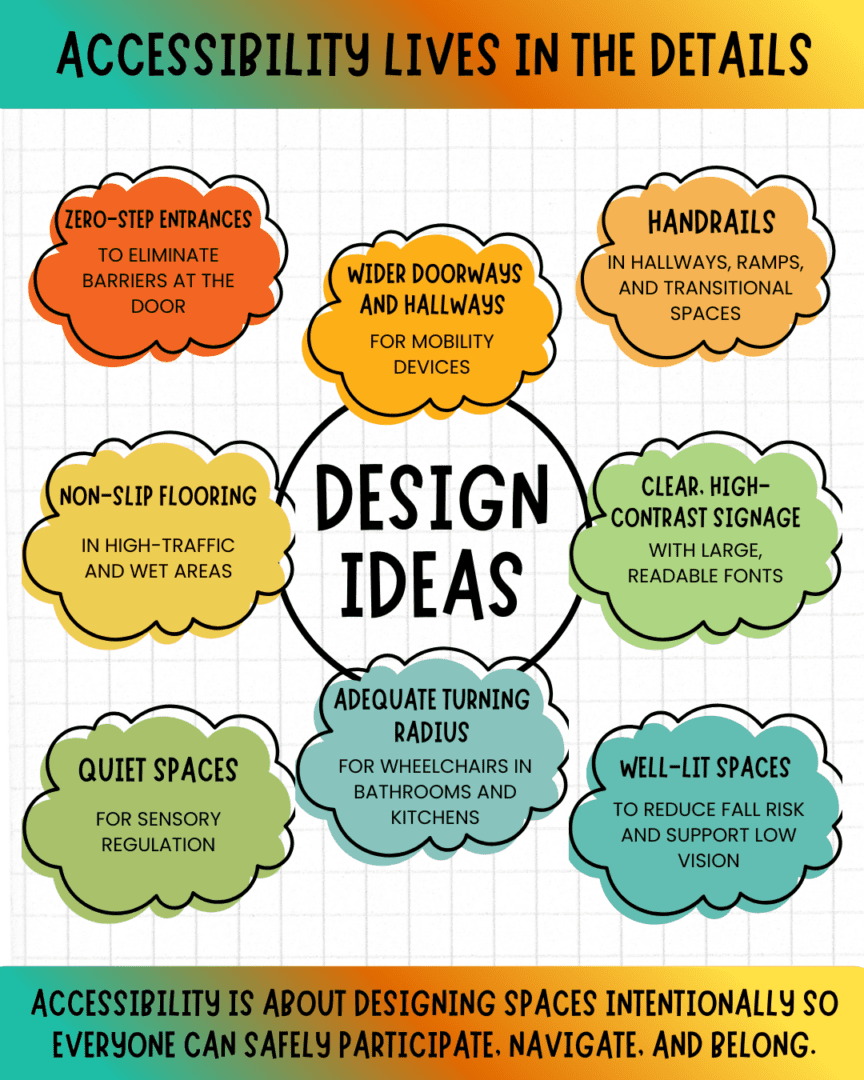
Accessibility often begins with small, intentional design choices that shape how people experience a space every day. From the entrance of a home to the layout of a workplace, thoughtful planning can transform environments into places where individuals can safely participate, navigate, and feel a true sense of belonging. At the Center for Independent Living of Central Florida, accessibility is approached as a foundational element of community design. When accessibility is considered early in the process, communities become stronger, safer, and more inclusive for people of all abilities.
Design decisions made at entry points can have a meaningful impact on independence and mobility. Zero step entrances allow individuals using wheelchairs, walkers, or other mobility devices to enter spaces more easily. Wider doorways and hallways provide additional room for movement and help individuals navigate without unnecessary barriers. Handrails placed along ramps, hallways, and transitional spaces offer stability and confidence, reducing fall risk while supporting independence in everyday environments.
Materials and lighting also contribute significantly to accessible design. Non slip flooring in high traffic or wet areas helps create safer conditions for everyone. Well lit spaces support individuals with low vision and make navigation easier and more comfortable. Clear, high contrast signage with large readable fonts improves wayfinding and communication for individuals with visual or cognitive disabilities while also enhancing the overall experience for visitors.
Accessibility extends beyond physical mobility and includes sensory considerations as well. Quiet spaces can provide opportunities for individuals to regulate sensory input and recharge in environments that may otherwise feel overwhelming. Adequate turning radius in bathrooms and kitchens allows individuals using mobility devices to move safely and independently while completing daily tasks. These thoughtful design elements promote dignity, comfort, and autonomy.
The impact of accessible design reaches far beyond any single group. Families with strollers, older adults navigating changing mobility needs, employees recovering from injuries, and visitors unfamiliar with a space all benefit from environments that are easier to use and navigate. Inclusive design strengthens safety, usability, and community connection.
As communities continue to grow and evolve, accessibility remains an essential part of building spaces where everyone can thrive. Designing with intention today helps create neighborhoods, workplaces, and public spaces that support independence and participation for years to come. Accessibility lives in the details, and through thoughtful planning and collaboration, communities can reflect a shared commitment to inclusion and belonging.